

Darkroom Etiquette Guide
All of the information on this page was co-created with people who regularly use darkrooms. Thank you to everyone who shared their time and insights with us!
This guide was produced by The Love Tank in collaboration with Dr Jamie Hakim – a queer researcher based at King’s College London.
CREDITS
RESEARCH BY
Dr Jamie Hakim
WORDS BY
Dr Jamie Hakim
Dr Benjamin Weil
Dr Will Nutland
ILLUSTRATIONS BY
Thomas Iglesias
DESIGN BY
Richard Kahwagi
1. Introduction: What’s a darkroom? What’s darkroom etiquette? / 2. Darkroom Etiquette: At a Glance / 3. Overcoming First Time Nerves / 4. The Phases of a Darkroom / 5. How To Signal Interest / 6. How to Signal That You Are Not Interested in Having Sex / 7. If Someone Forcefully Insists / 8. How To Stop an Encounter / 9. Dealing with Rejection / 10. Experimentation and Surprise! / 11. Safer Sex in the Darkroom / 12. Drugs and Alcohol / 13. Aftercare / 14. Collective Care / 15. Collective Care Quick Tips / 16. Maybe Another Darkroom Is for You?
Introduction:
What’s a darkroom? What’s darkroom etiquette?
![[2] thomasiglesias x LOVETANK.png](https://images.squarespace-cdn.com/content/v1/60be2f8a0cc8001044609e26/818affc5-18b5-4f3e-8f6c-b4d17438ac73/%5B2%5D+thomasiglesias+x+LOVETANK.png)
![[1] thomasiglesias x LOVETANK.png](https://images.squarespace-cdn.com/content/v1/60be2f8a0cc8001044609e26/1779889693518-U1U5070KLXIOMVQ6E42D/%5B1%5D+thomasiglesias+x+LOVETANK.png)
A darkroom is a designated space at a party, club or sex-on-premises venue where people can have sex.
Sometimes darkrooms have sectioned-off areas, such as cubicles, for people to have sex with some privacy but, mostly, people openly have sex alongside each other in these spaces.
Darkrooms have always been an important part of queer nightlife but are becoming more common again at queer parties.
People enjoy them for different reasons. For some people, darkrooms might be the most important part of their night out. For others, a darkroom is a convenient place to take someone they’re getting hot and heavy on the dance floor with.
And we know that for lots of people, using a darkroom can be a genuinely transformative experience.
If you haven’t used a darkroom before, or even if you have, we know they can feel intimidating and overwhelming. They are dark, often busy, sometimes noisy spaces filled with strangers having sex or wanting to have sex. From the outside, this can be off-putting, even distressing, for some people.
We don’t want people’s worries to stop them from having experiences that they might enjoy, which is why we've produced this darkroom guide: it provides newcomers with the essential knowledge and reassurance that might usually take lots of nervous visits to acquire.
We also know that some people - even people who had experiences with darkrooms before - worry that darkrooms might not be safe places to have sex. This is because they - especially certain kinds of darkrooms (see the note below) - can be seen as a ‘free for all’: a space where anything goes and rules about consent go out of the window.
Because of their long history in queer scenes, darkrooms do actually have an established ‘etiquette’ - the rules that determine kind and respectful behaviour - that is recognised in many different places around the world.
Because lots of darkroom etiquette is non-verbal - for instance, it might involve understanding and responding to other people’s body language or eye contact - darkroom etiquette isn’t usually written down.
Note: There are lots of types of darkrooms and playspaces - all of which have their own way of doing things. The information that follows is built around darkroom spaces that cater, primarily, to queer men. We’ve focussed on these because we know these are the kinds of spaces that are most likely to have unwritten and longstanding codes of conduct and, so, are much more likely to be intimidating for newcomers.
We know that these kinds of darkrooms are becoming more and more inclusive of people with different gender identities and sexualities. This guide is for anyone, whatever your gender or sexuality, who might use or want to use a darkroom space like this!
With the input of people who have lots of experience using darkrooms, we’ve collected as many helpful tips as possible to help you navigate darkrooms safely and look after other people at the same time. This includes topics like negotiating consent, dealing with rejection, safer sex, and aftercare – the kind of stuff that can make darkrooms safer and hotter for everyone!

Darkroom Etiquette: At a Glance
-
Darkrooms are for sex - but there isn’t just one way to use them.
People usually go in looking for sex with strangers - but you could go in there with someone you’ve already met and agreed to have sex with.
-
Consent to sex is usually negotiated or given non-verbally in darkrooms,
through eye contact, gestures and body language.
-
But speaking isn’t forbidden and does happen in darkrooms.
For instance, after sex, people will say thanks, ask names etc. Despite how they can be perceived, darkrooms can actually be quite friendly and sociable.
-
Remember that there is no expectation to have penetrative sex in a darkroom.
People get up to all sorts of different things, including not having sex and just enjoying the vibe or the view.
-
Darkrooms are phone-free spaces!
It’s not ok to film or take photographs - especially of other people - in darkrooms, or to shine a light around. Leave your phone in your pocket/bag/with a friend while you play in the space.
Overcoming First Time Nerves
Darkrooms can be exciting places to explore your sexuality, but they can also be intimidating, and confusing - especially if you’ve never been to one before. There are things you can do to help with first time nerves.
-
You don’t have to be alone when you go into a darkroom for the first time. Go to the darkroom with a friend, partner or fuck buddy. Or, if you are going to a darkroom at a rave or a club, go in with someone you have picked up on the dancefloor.
-
Taking a look at the darkroom before you use it can help shake off some first time nerves.Go early in the night when the darkroom is empty so you can get a feel for the space.
Darkrooms are rarely pitch black - you can see when you’re inside them - but when you first enter, give your eyes a minute to adjust to the lighting. Once you have, scope out the space and get familiar with it. Are there nooks and crannies that will give you privacy to have sex? Are there places that might put you on display if you want to be watched?
-
Before you use a darkroom for the first time, you might want to think about what you want from the experience. Think about what your boundaries are ahead of time: what you want to do and what you absolutely won’t do - your ‘red lines’. This can help you set some intentions for what might happen in there and also keep you open to being surprised by things that don’t cross your red lines.
You can keep thinking about this when you’re in the darkroom - you don’t need to do something right away! Lots of people just hang in darkrooms to experience the vibe and watch. Watching, including watching and touching yourself, is usually perfectly acceptable in these kinds of spaces (but see: How to Signal That You Are Not Interested in Having Sex).
-
Doing anything new for the first time can be intimidating - a darkroom is no different. If you think sex in a darkroom is an experience you want to have, be brave and push through the initial discomfort. Confidence comes with time and experience of darkrooms - working through the first time nerves is the biggest and most important step for feeling at ease in spaces like these!
Remember, whether it’s your first or your 51st time using a darkroom, if you feel overwhelmed, you can always step out of a darkroom and come back when you feel more relaxed.
The Phases of a Darkroom
Inside the darkroom, there are lots of non-verbal ways to let someone know you’re interested in having sex:
How To Signal Interest

• Maintain eye contact with someone
• Move closer to someone
• Stand or sit next to someone
• Smile at someone
It is usually acceptable to touch people in darkrooms without getting their prior consent, but only in certain ways:
• You can gently brush past someone
• Or you can tentatively touch someone’s arm, chest, leg - but not genitals or face
Some people get on all fours on a mattress or a bench with their asses in the air, as a sign they are happy for anyone to start fucking them… though you might want to caress their back or their ass, and see how they respond, just to make sure.
It is sometimes acceptable to approach people who are already having sex, if they signal that they are open to it (for instance, if they maintain eye contact with you when you look). But don’t barge into a scene if you haven’t been obviously invited to.
Importantly: Don’t be pushy! If someone signals to you that they are not interested (see next section), then leave them be. No means no.
How to Signal That You Are Not Interested in Having Sex

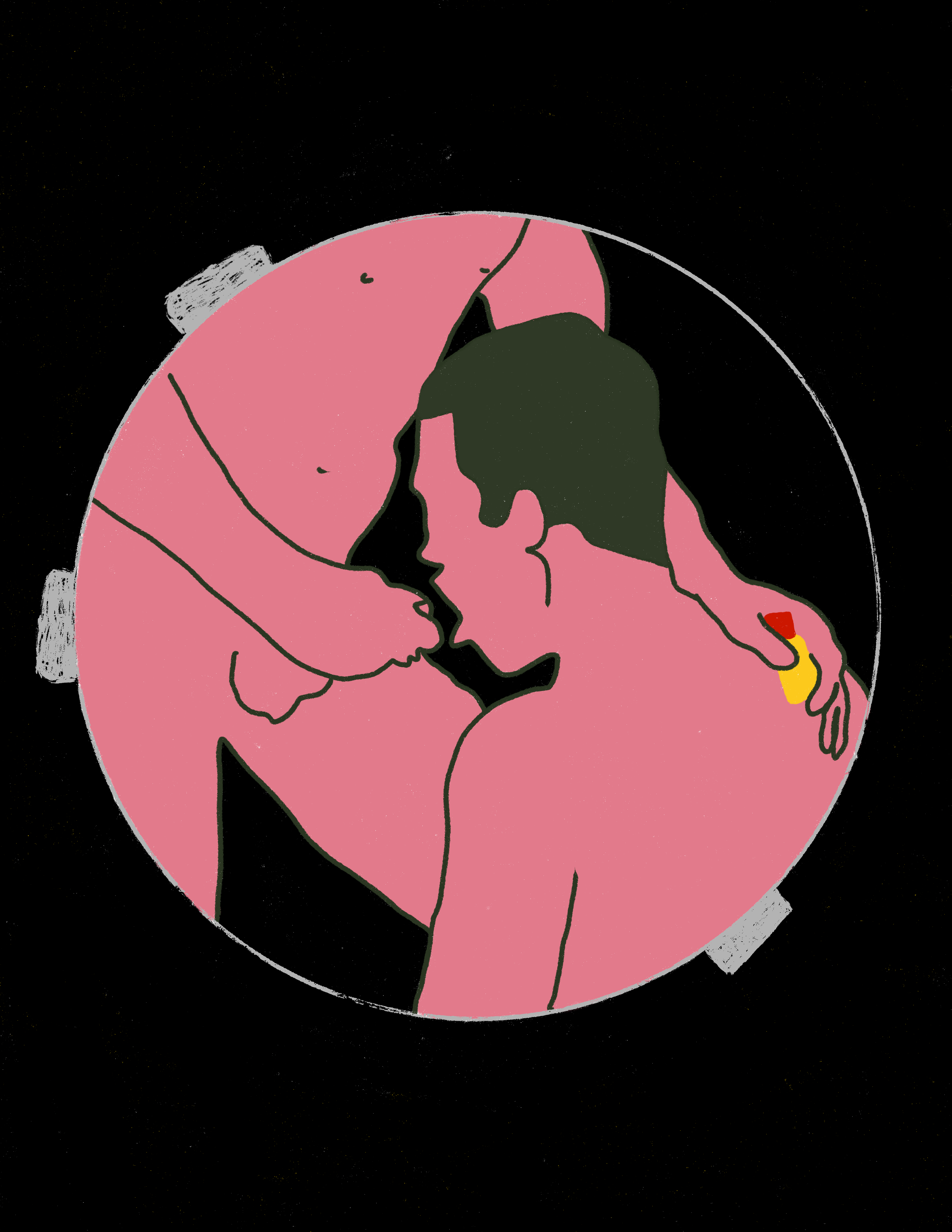
Understanding how to signal that you are not interested in having sex, and being able to read other people’s signals, is just as important as being able to indicate that you want to have sex - especially when things are non-verbal.
Here’s a few things you can do:
If someone is trying to establish eye contact with you, avert your gaze. You can also cover your genitals to signal that you aren’t interested
If someone sits or stands next to you, move away
If someone tentatively touches you, politely remove their hand
The ‘double tap’ (a couple of taps on the arm or hand) is a common gesture in the darkroom and is used to show that you are asking someone to move on
If someone is watching you and/or touching themselves, and this is unwelcome, you can say something like “please can I/we have some space?”
If you’re already having sex with someone and others try to join in, and you’re not interested, you can gently ask to be left alone (or use the signals above)
If someone is being insistent, this is when people start to use words. A polite but firm ‘no thanks’ usually does the trick
However you choose to signal that you are not interested, be nice and respectful about it - and always respect other people’s signals too (see: Dealing with Rejection).
If Someone Forcefully Insists
It’s not common for people in darkrooms to insist on sex after disinterest has been signalled, but it can happen.
A benefit of the darkroom, especially at peak hours, is that you are surrounded by a lot of other people. This can act as a deterrent, and minimises the chances that someone will be violent. It also means there are people who can step in if they notice or if you signal that you need help (see: Collective Care).
If someone does insist on sex, many venues with darkrooms now employ welfare teams that you can report this to and who are trained to deal with these situations. Otherwise, you can notify security or another member of staff.
How To Stop an Encounter
Sometimes, you might want to stop having sex before the person or people you are having sex with do. There are a few ways you can indicate this:
The double tap (give them a couple of taps on the arm or hand)
Move away
Go verbal. Saying things like ‘I need a break’, ‘I’m going for a walk’ or ‘I’m going to the toilet’, usually does the trick
You can also start chatting. Ask their name or where they are from. This usually signals that you would like the encounter to stop
Dealing with Rejection
Getting rejected is part of the experience of using a darkroom.
Different people deal with rejection in different ways at different times. Sometimes, getting rejected feels like no big deal. Other times, it can feel very painful – for instance, if you feel like you have been rejected for something you feel insecure about. If you’re used to feeling overlooked in queer scenes - or in society more generally - because of things like your age, your ethnicity, your gender identity, your disability, or the way you look, rejection might hurt more too.
There are a few things you might bear in mind to help you deal with rejection:
Darkrooms are intense spaces that can make us feel vulnerable. They are spaces where our bodies, desires, and sex are on display, which can amplify the insecurities we have that no-one else notices or cares about. Bear that in mind as you make your way through the space and tread gently with yourself and others
Darkrooms are filled with different people with different types, tastes and desires. You are not going to be everyone’s cup of tea, just like not everyone will be yours. In this sense, rejection is part of everyone’s experience of a darkroom - not just yours! If someone rejects you, remember this and move on to the next encounter
Sometimes, after getting rejected, you might see that the person who has rejected you is into something wildly different from you (they might be looking for something very particular!). This can also be reassuring
Experimentation and Surprise!
Hook-up apps like Grindr are great for looking for the sex that you want - but because of the way they are laid out and organised, they can make us a bit rigid and set in our ways!
Darkrooms are great spaces for experimenting. They’re full of lots of different people with different tastes, desires, and types – and you can have sex quite spontaneously there.
You can use darkrooms as an opportunity to try things you haven’t tried before, with people you might not come into contact with on the apps! Let yourself experience all the opportunities that the energy of the darkroom can provide.
If you try something new and don’t enjoy it – just politely stop. It’s unlikely the other person/people will care.
Safer Sex in the Darkroom
In an era of HIV PrEP, U=U, and DoxyPEP, condoms are used far less in darkrooms than they once were but many venues still make condoms available alongside lube.
Some people using darkrooms prefer to use condoms, especially trans men and people who are visiting darkrooms from places where condom use is much more common.
It’s important to be mindful of these differences when making decisions about condom use. Many of us who don’t use condoms in darkrooms have carefully thought through other ways to look after our sexual and reproductive health. Those of us who decide to use condoms have also considered why they are important for our reproductive and sexual health or pleasure.
If you’re in a darkroom and don’t like someone else’s sexual or reproductive health decisions, then there will be plenty of others who match your preferences.
Remember removing a condom without consent (known as ‘stealthing’) is a shitty thing to do and illegal!
Darkroom sexual health doesn’t just happen in the venue itself: knowing about vaccinations, regular STI testing, HIV PrEP, HIV PEP, DoxyPEP, and U=U are all part of safer sex for darkrooms attendees. You can learn more about these options at queerhealth.info and prepster.info.
Drugs and Alcohol
It’s common for people to be drunk or high in a darkroom.
Being drunk or high doesn’t mean you can’t consent to sex (some people might drink or take drugs to make sex feel better or easier for them!) - but people can become so drunk or high that they become incapacitated.
Knowing your own limits with drugs or alcohol and setting your boundaries around sex ahead of time can help ensure you stay in control when high or drunk in a darkroom.
Never have sex with or take advantage of other people who are incapacitated.
If you see someone who looks like they’ve taken too much, or seems unsafe, give them a hand out of the darkroom if they need it, or call on a welfare team.
For a comprehensive harm reduction guide on the most common club drugs visit Sex Drugs and Care For All or check out our Little Backpocket Guide To Safer Chillouts.
Aftercare
Unless you are using a darkroom in a gay sauna, there are rarely facilities available to clean up thoroughly after sex (or douche before).
If a space or an event has a darkroom it is not unusual to see people washing their genitals and arses in the sinks in the toilets. You could also bring wet wipes with you.
Many places with darkrooms have large rolls of tissue paper. You can use these to clean yourself up after you’re done. When you’ve done that, make sure you wipe down the area where you had sex!
Now might also be a good time to connect with the person or people you’ve been having sex with, if they leave the darkroom at the same time. Not everyone wants post-sex chat, but it can be a good opportunity to acknowledge them, see if they want some water or a tissue, or, if you’re interested in a replay, asking about swapping numbers.
Collective Care
Darkrooms are shared, community spaces. Even in spaces dominated by cis gay men, they are filled with people of different backgrounds, ethnicities, gender identities, ages, some living with different disabilities. Everyone is in there looking to enjoy themselves and maybe even form longer lasting connections, whilst sometimes feeling vulnerable and exposed.
Let’s enter into darkrooms in the spirit of collective care. That means looking after ourselves and each other. Treat everyone with kindness and respect – even, perhaps especially, if you are rejecting their advances.
Collective Care Quick Tips
-
Share space nicely
- including any equipment that might be in the darkroom such as slings, private spaces such as cubicles, or gloryholes or fuck-tables. Give others the chance to have a go!
-
Don’t shame people for the sex that they want or the way they have sex.
Darkrooms can be filled with things you have not seen, heard or smelled before. Do not laugh or gawk.
-
Be mindful of younger people who might be inexperienced and nervous,
or much older people, some of whom might go to darkrooms just to watch.
-
Remember that photographing or videoing someone without their consent during sex is illegal.
Phones aren’t for darkrooms (and nor are loud conversations - take them to the bar!).
-
If someone needs help:
step in if you feel comfortable, or call on the welfare team.
Maybe Another Darkroom Is for You?
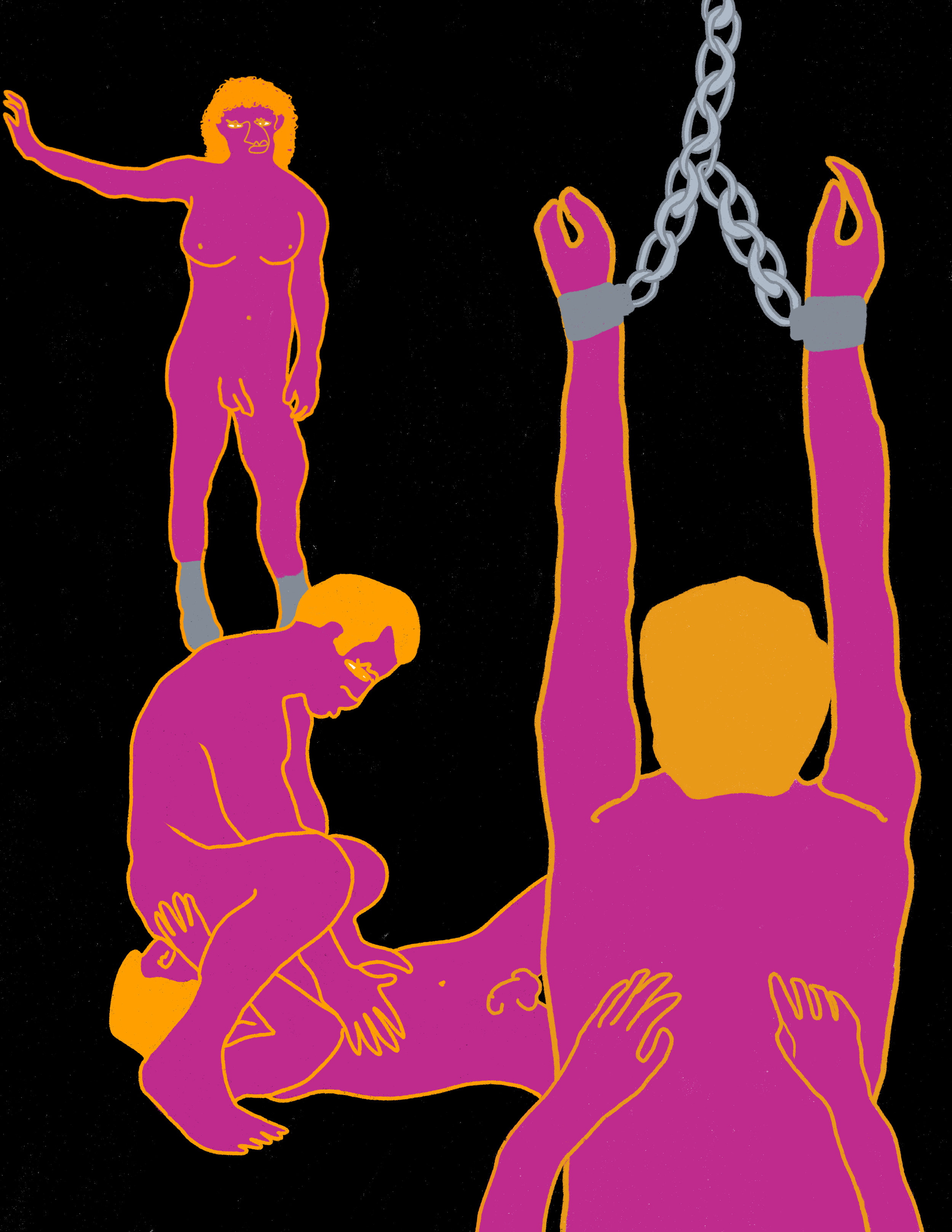
There are many different styles of darkroom and playspaces. Some have a greater mix of genders. Some are more centred around BDSM and kink. Some make explicit demands for verbal consent for all forms of sexual activity including touching people. Some require that you only have sex with someone you have entered the space with and do not allow watching.
If the etiquette described in the sections before makes you feel anxious, uncomfortable or just turned off, then perhaps these kinds of darkrooms are not for you. There are many other spaces where you can explore your sexuality in public!

Credits
PRODUCED BY
The Love Tank CIC
RESEARCH BY
Dr Jamie Hakim
Dr Will Nutland
Dr Benjamin Weil
ILLUSTRATIONS BY
Thomas Iglesias
DESIGN BY
Richard Kahwagi