
Which sexual health vaccines can I get on the NHS right now?
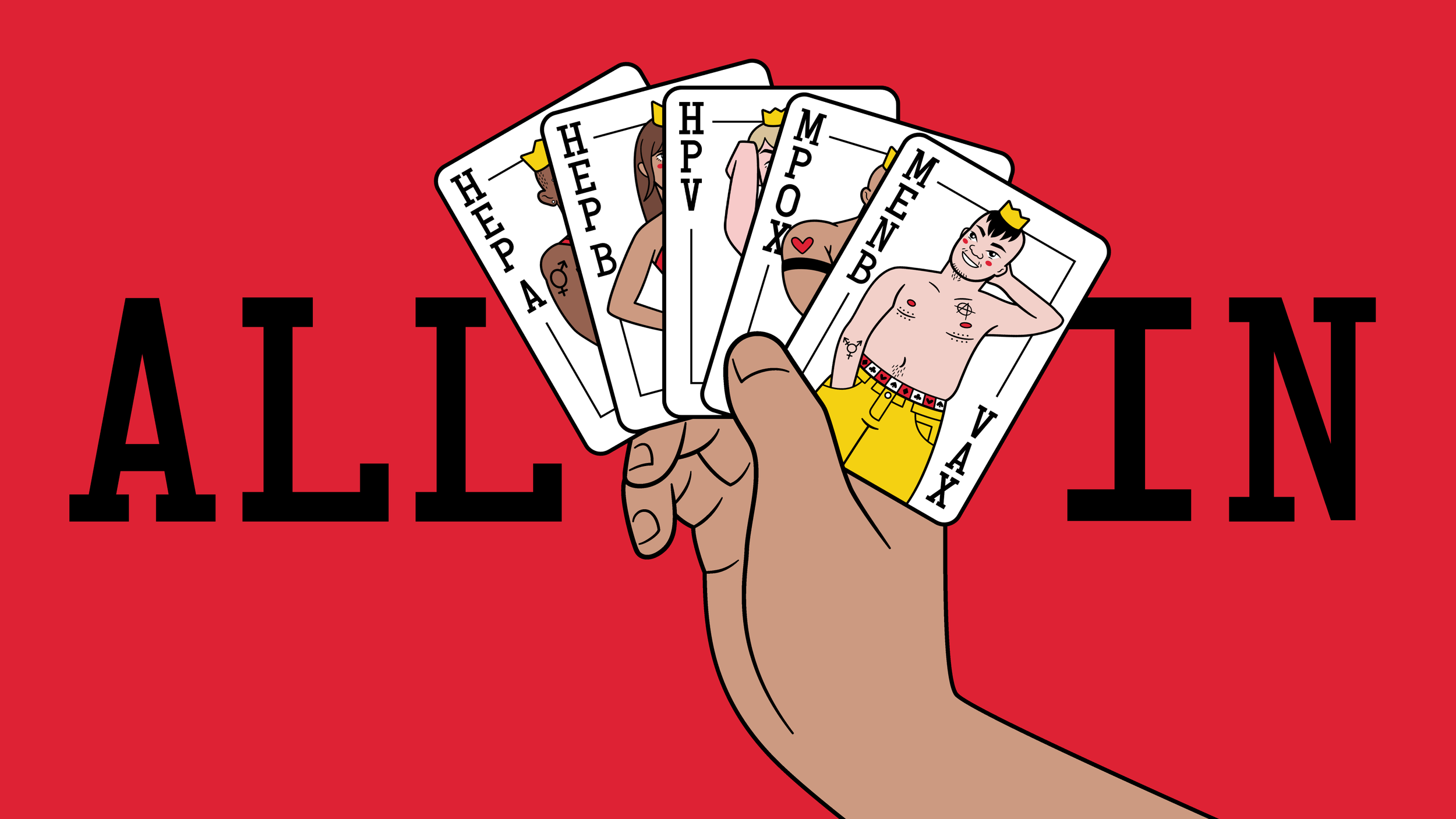
READY TO GO ALL IN?
Getting vaccinated is one of the simplest ways to protect ourselves and others from some of the most common sexually transmitted infections (STI).
These vaccines are available for free from NHS sexual health clinics—regardless of your employment or migration status.
We’ve collected all the available information right here, on one page: Using our stacked deck of vaccine cards, you can find out exactly which ones are available, if you are eligible, and what the dosage and vaccine schedules look like.
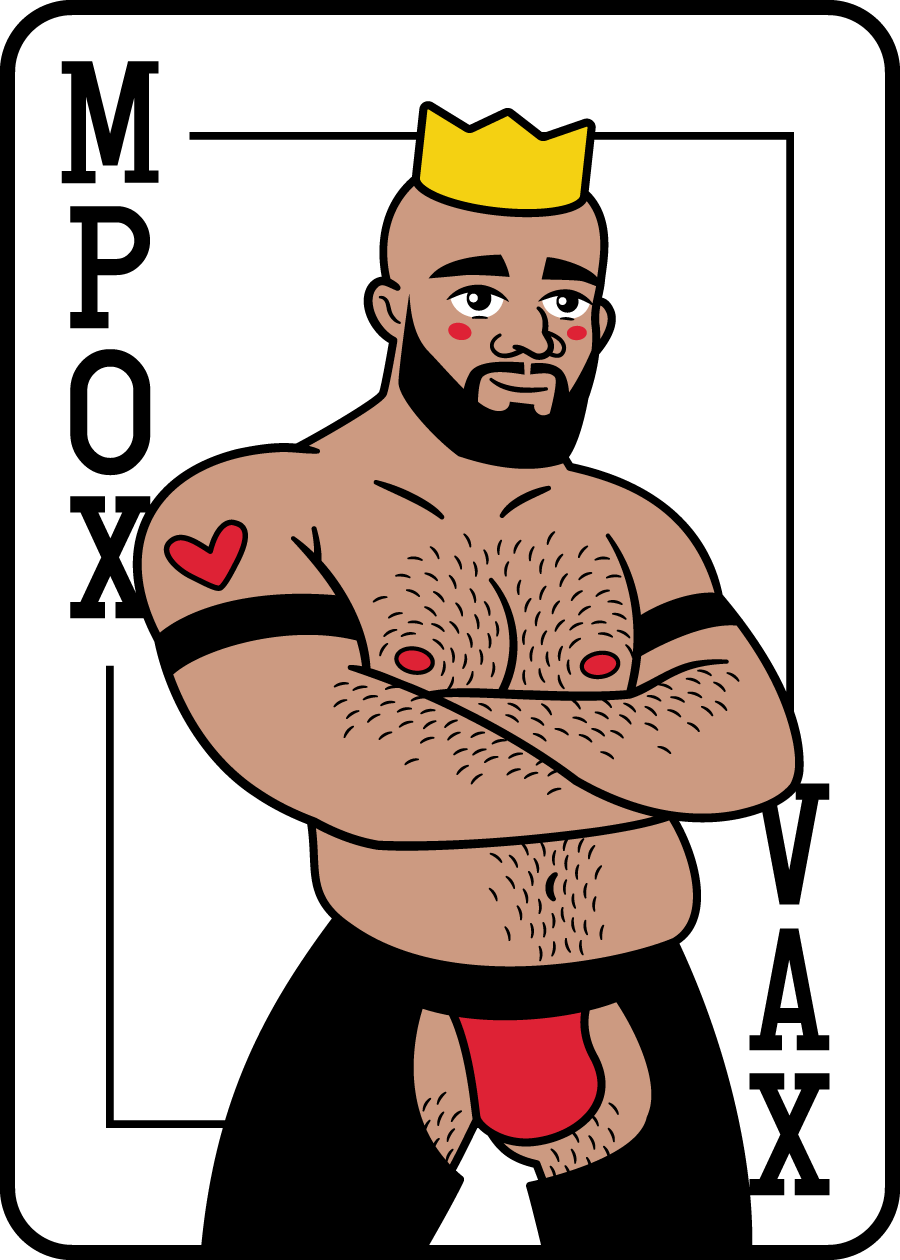
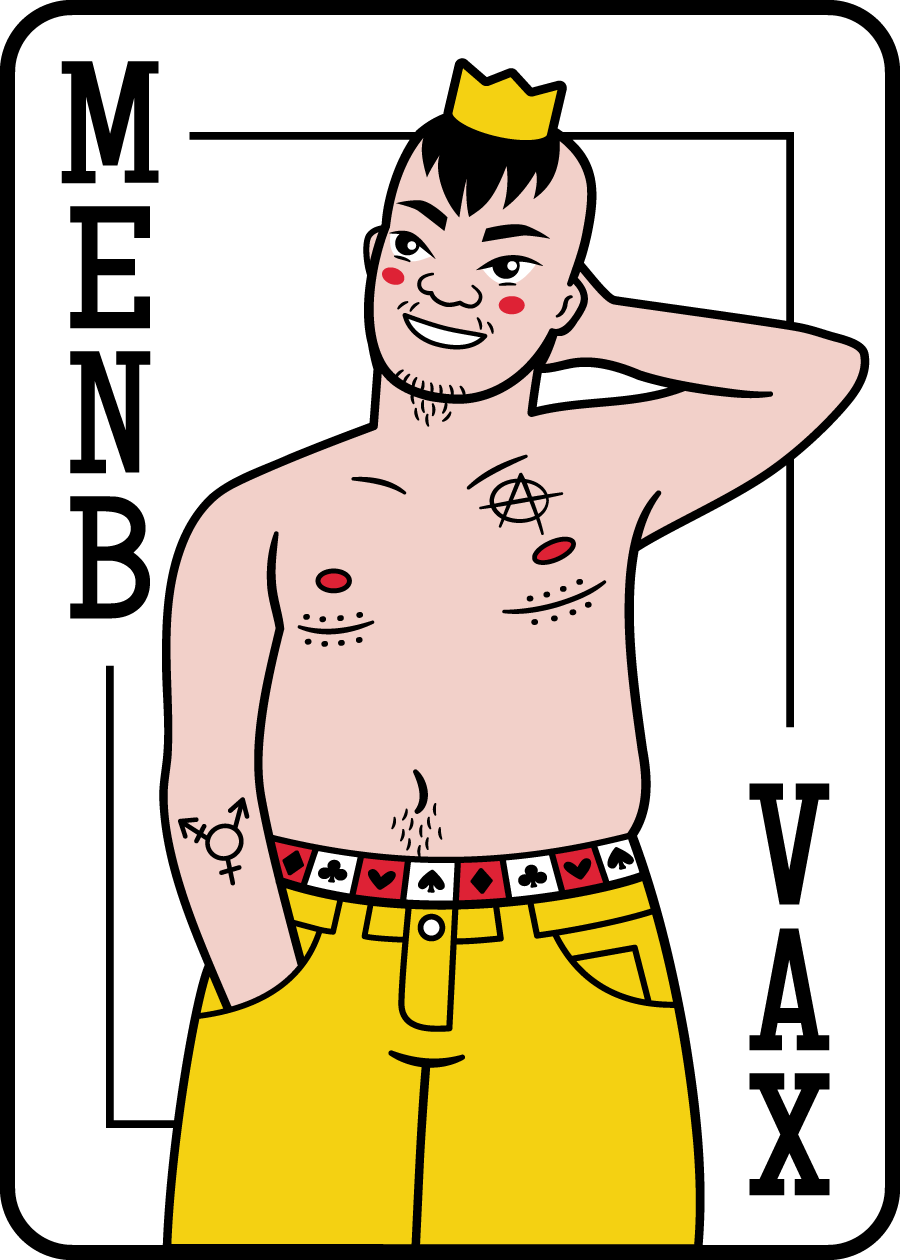
Illustrations by Fetish Doodles.
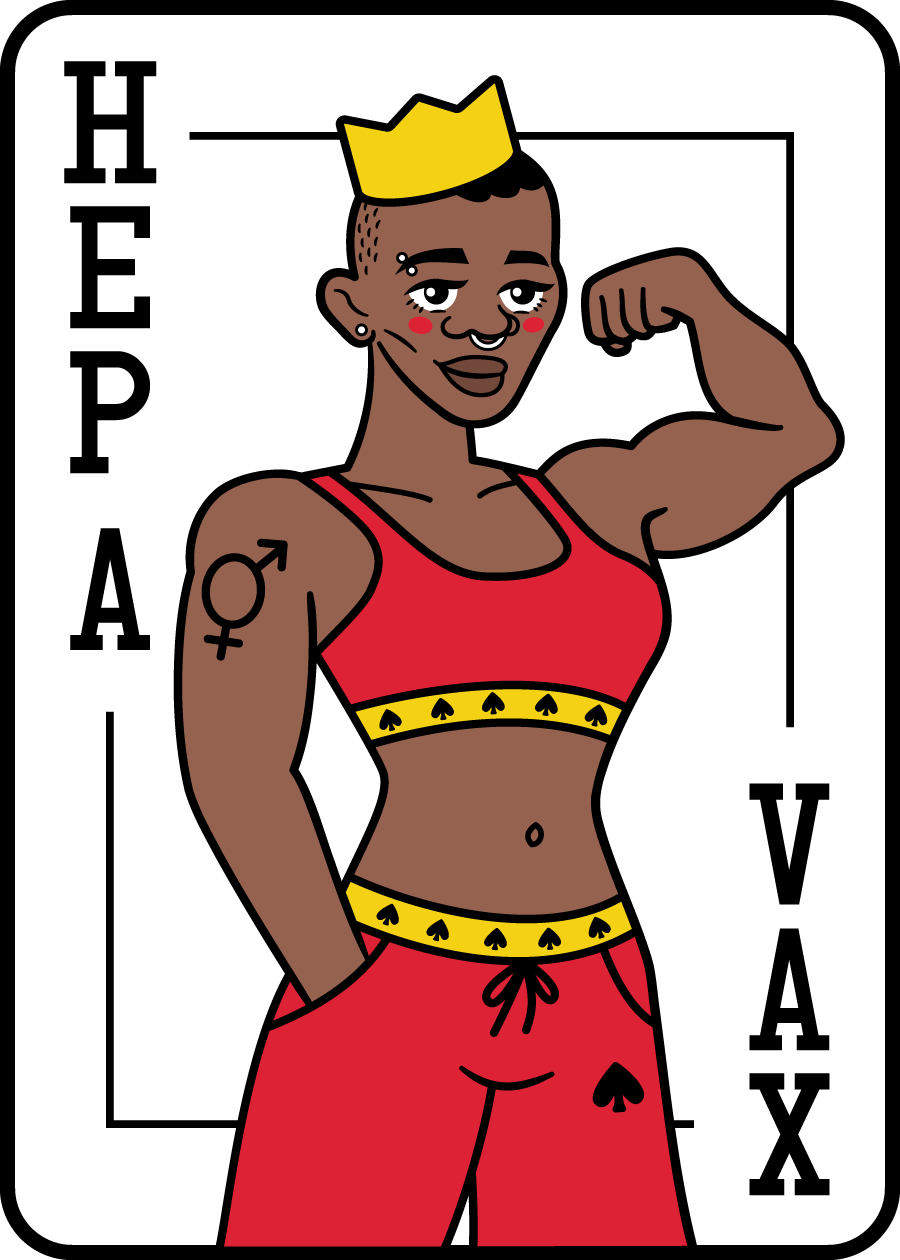
HEP A vaccine
This vaccine protects against Hepatitis A, an infection that can be transmitted through close physical contact, including sex.
You can learn more about Hepatitis A and the vaccine from here.
-
Gay men, bi men, and other men who have sex with men (GBMSM); people – including trans women and non-binary people - who have sex with GBMSM; sex workers; people who pay for sex; people living with HIV; people who inject drugs.
-
2 doses, at least six months apart.
-
With a complete course, you should be protected for up to 25 years.
-
If it’s been a very long time since you completed your vaccine course, or if you aren’t sure if you completed one, you can get an immunity test from a sexual health clinic. This is a blood test, and it can take a few days to get the results. Depending on the outcome, your clinician may recommend a booster dose.
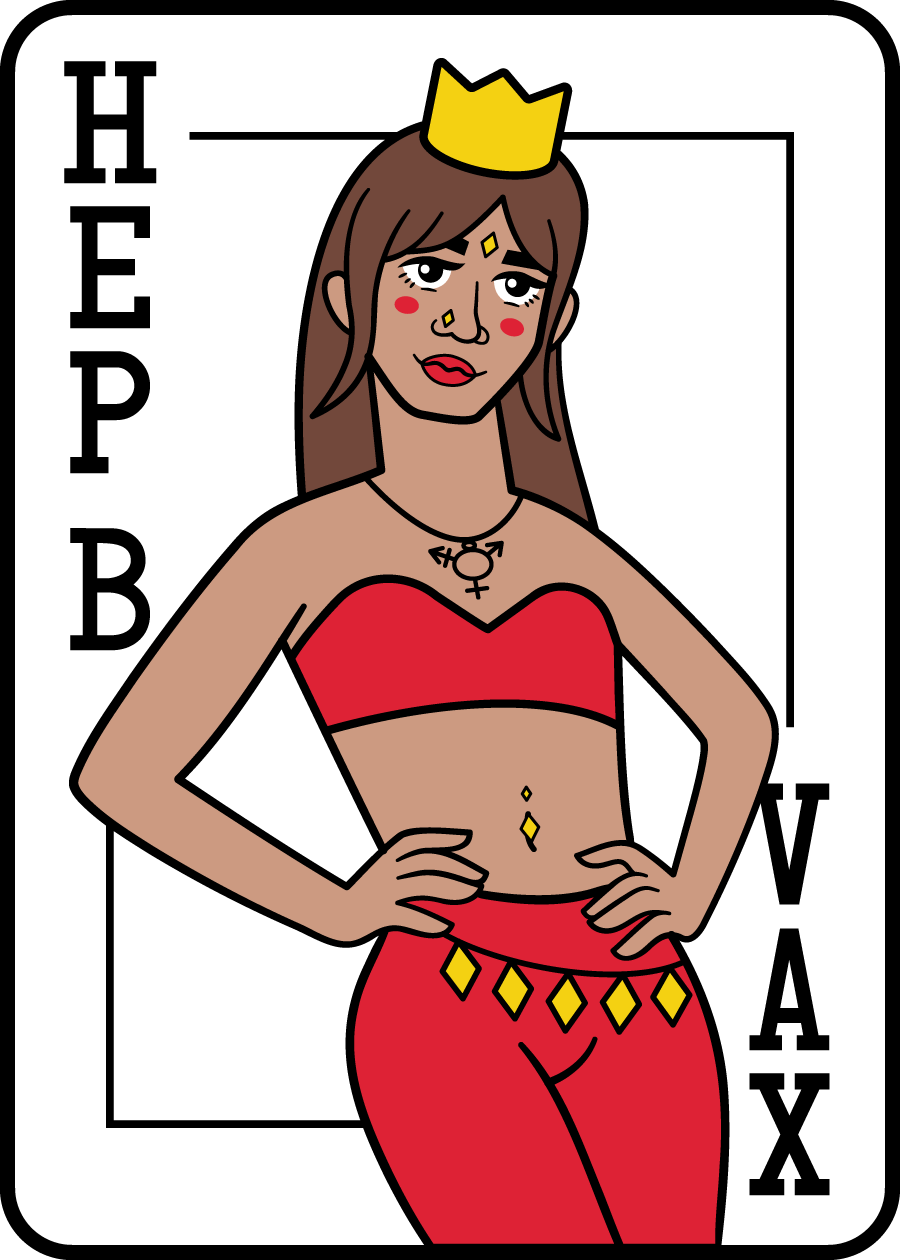
HEP B vaccine
This vaccine protects against Hepatitis B, an infection that can be transmitted through sexual contact and sharing injection equipment like needles or syringes.
You can learn more about the Hepatitis B vaccine from here.
-
Gay men, bi men, and other men who have sex with men (GBMSM); people – including trans women and non-binary people - who have sex with GBMSM; sex workers; people who pay for sex; people who inject drugs; people living with HIV.
-
3 doses, once a month over three months. People living with HIV will need a double dose once a month over four months.
-
With a complete course, you will be protected for as long as 20 to 30 years.
-
If it’s been a very long time since you completed your vaccine course, you can get an immunity test from your sexual health service. As with the Hep A immunity test, this will involve a blood test, and it can take a few days to get the result. Depending on the outcome, your clinician may recommend a booster dose.
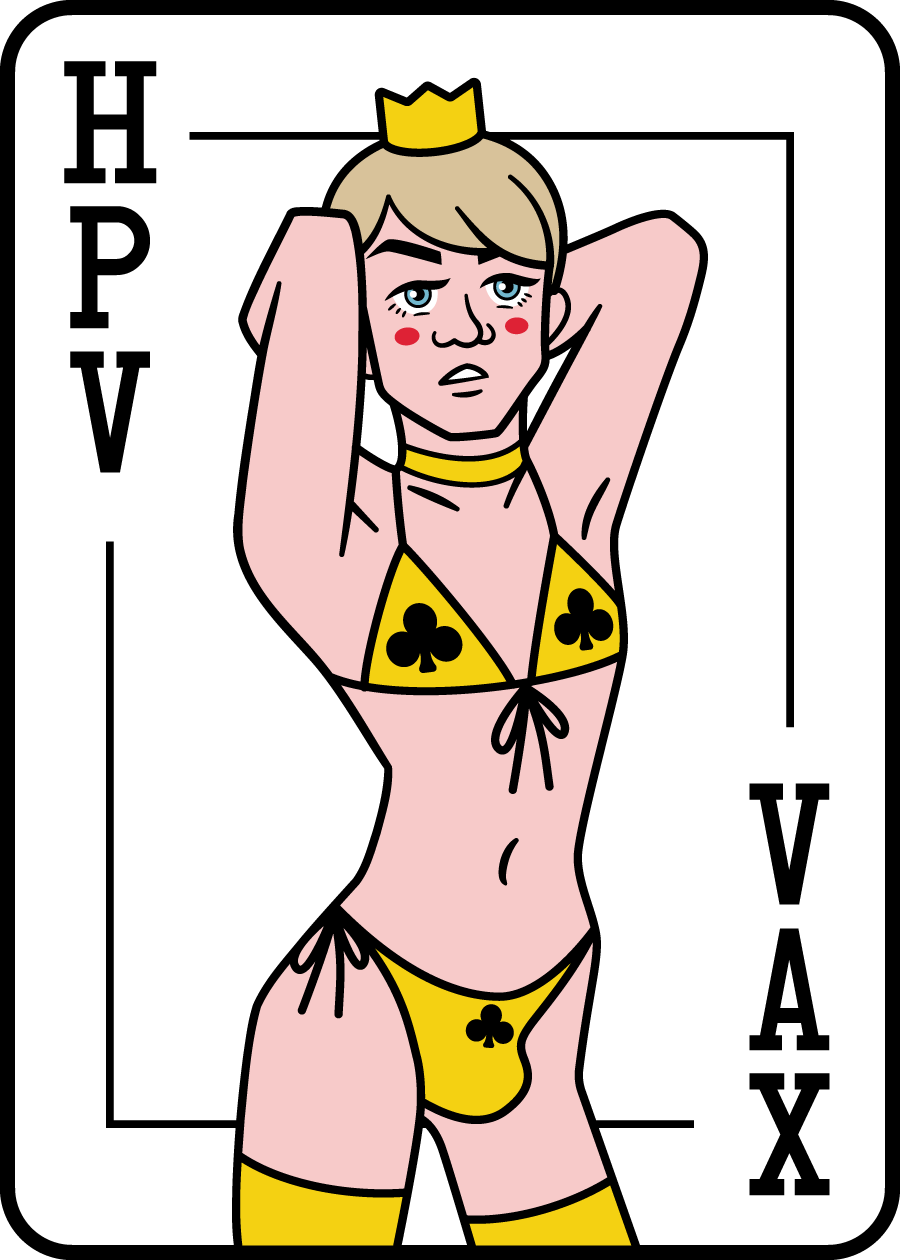
HPV vaccine
The HPV vaccine protects against strains of the human papillomavirus (HPV), which is passed on through skin-to-skin contact.
You can learn more about both HPV and the HPV vaccine from here.
-
All young people under 25 who didn’t get it during secondary school; Gay men, bi men, and other men who have sex with men (GBMSM), up to age 45; people – including trans women and non-binary people - who have sex with GBMSM, up to age 45; sex workers; people living with HIV
Note: If you went to school in the UK and were in Year 8 (aged 12-13) in secondary school from September 2019, you may have already been offered the HPV vaccine as part of a national immunisation programme. -
1 shot if you’re under 25, 2 doses if you’re over 25, at least six months apart. 3 doses if you’re immunocompromised, regardless of age, with at least 1 month between the first two doses, and at least 3 months between the second and third.
-
The protection provided by the vaccine is maintained for at least 10 years following a full immunisation course.
-
No.
MPOX vaccine
This is the same as the vaccine that protects against smallpox, but has also been discovered to protect against MPOX, formerly known as monkeypox.
You can learn more about MPOX and the vaccine from here.
-
Gay men, bi men, and other men who have sex with men (GBMSM); people – including trans women and non-binary people - who have sex with GBMSM; people who engage in group sex or either visit or work at sex-on-premises venues (including people like cleaning staff).
-
2 shots, at least 28 days apart.
-
Current studies suggest that protection from a full course of the vaccine can last 7-10 years.
-
If you’ve received both vaccines, a booster is not currently recommended.
MenB vaccine
The vaccine protects against the bacteria called meningococcal B, but studies have suggested that it can also provide protection against gonorrhoea.
You can learn more about the MenB vaccine from here.
-
Gay men, bi men, and other men who have sex with men (GBMSM) who regularly change sexual partners; people – including trans women and non-binary people - who have sex with GBMSM and regularly change sexual partners; sex workers.
A limited programme to provide the MenB vaccine to young people attending sixth form, college, and university was launched in June 2026. You can read more about this specific programme from here.
-
Two doses, at least 28 days apart.
-
Studies show that the vaccine could provide at least three years of protection.
-
The vaccine programme is relatively new, but it is possible that in a few years’ time, boosters will be recommended to those who have completed a first course (two doses) of MenB vaccines.
Frequently asked questions
-
Are vaccines safe?
Yes. Vaccines are always tested for safety in humans before they are approved, and all of the vaccines mentioned in this guide have been in use for decades, with millions of people receiving them.
Most people who receive a vaccine experience no side effects aside from temporary ones like a sore arm, a mild headache, or a runny nose. Serious side effects from routine vaccines are exceptionally rare. If you’re worried, talk to a health professional or community organisation beforehand about your concerns. You can also continue to take your HIV meds, HIV PrEP, antibiotics (including DoxyPEP) or hormone replacement therapy (HRT) when getting any of the vaccines above. -
Where can I get vaccinated?
The easiest place to receive your vaccines from is your local or regular sexual health clinic. They will usually have vaccines in stock ready for routine administration. Use the clinic-finder links below to see where you can get your vaccinations from.
• England
• Scotland
• Wales
You may also be able to access vaccines from your local GP. Other means of getting your vaccines include pop-up clinics. The Love Tank occasionally runs these as part of our outreach programmes , and we advertise when and where these happen we on our website.
-
If I get all my doses, will I still get an STI?
Getting the full course of the vaccines you’re eligible for – or even if you don’t get a complete course – will significantly reduce your chances of getting an STI if you are exposed to one. This is what scientists mean when they describe how effective a vaccine is. For example, studies have shown that a full course of the Hepatitis A vaccine is more than 95% effective, meaning people who have received it are 95% less likely to get Hepatitis A than people who haven’t been vaccinated against it.
However, it’s possible that you may still get an STI even if you’re fully vaccinated. Vaccines cannot provide 100% protection due to many factors, including how our individual bodies respond to infection. That said, it’s also important to remember that, if they do get an STI, vaccinated people are much less likely to experience severe symptoms or require hospitalisation.
-
What else can I do to reduce my chances of getting an STI?
Vaccines are only one part of sexual health and just one way of looking after ourselves, the people we have sex with, and our communities. Vaccines work in combination with other ways of preventing STIs, including HIV PrEP, DoxyPEP, testing and treatment, or using condoms or dental dams.
However, even if you are using none of these as part of your routine sexual health, getting your vaccines can be a relatively simple and fast way to look after both yourself and your sexual partners.
-
Can I get different vaccines at the same time?
Yes! It is both safe and effective to get multiple vaccines in one clinic visit. Doing so also means you’ll have to visit the clinic fewer times in total over the course of your dosage schedule, meaning there’ll be less chance you’ll miss a dose. Check out our example schedule below for what this could look like.
-
What if I can’t or don’t get all my doses?
Completing the vaccine courses offers you the greatest protection, but even one shot of a vaccine offers more protection than none. Because of this, don’t hesitate to get the vaccine doses you can, even if you’re unsure about being able to complete the full schedule.
If you have difficulty remembering what doses you need to get or have already had, we’ve provided some advice below to help you keep track.
-
I can’t remember if I’ve received a vaccine already, or when my last dose was.
If you don’t remember how long it’s been since your first dose of a certain vaccine and you’re worried about when to get your second dose, the recommended spacing between doses is the least amount of time you need to wait. For example, while the advice here says you should wait 28 days to get your second dose of the MPOX vaccine after receiving your first, it’s OK if it’s been much longer than 28 days.
If you’re still not sure, or if you can’t remember which vaccines you’ve had in the past, talk to your sexual health clinic. They may be able to offer more specific advice and work out what vaccines you may have received based on the information they have. They may also be able to administer immunity tests for Hepatitis A and B to help determine if you need to have a further dose of either vaccine.
-
What can help me keep track of which vaccines I've had or upcoming doses?
We know it can be hard to keep track of exactly which vaccines you’ve had, or how many doses you’ve received. One thing you can do is to build up your own vaccine tracker.
You can do this by setting up a list on your Notes app on your phone or making a small table in a notebook. You can use the information on this page to work out which vaccines you’re eligible for, how many doses you need, and when you can get them.
By creating your own vaccine schedule, you can set reminders for yourself, and you’ll be able to go into a clinic and know exactly what to ask for. You can even sync up different dosage schedules, so that you can receive different vaccines on one appointment, reducing the amount of time you’ll have to spend in a clinic.
-
Can I get combination vaccines?
Yes - there’s a combination vaccine that combines the Hepatitis A and B vaccines, marketed as “Twinrix”. If you take this option, you’ll need an initial shot, followed by another 30 days later, and another 5 months after the second dose.
This can be a convenient option if your clinic has it, as it means you’ll need fewer injections over all. Check with your clinic if they have this available and discuss it with your doctor if you’re not sure if you’ve previously had this, or the single vaccine options. -
Is it free and confidential?
NHS sexual health services, including the vaccines recommended, are free for everyone to use - including overseas students and people with insecure immigration status. If you’re a sex worker, you may need to disclose this in order to confirm your eligibility for the vaccines you need, but NHS sexual health clinics, by law, cannot share your information without your permission (including to your family doctor or GP). They can only share details about you with other authorities if they believe there are safeguarding issues (such as concerns about abuse, neglect, or modern slavery. Being a sex worker is NOT considered a safeguarding issue).
You also do not have to give your real name when you visit a sexual health clinic. You’ll only need to provide a postcode, and some means of contacting you, such as an email address or a phone number. This way, the clinic can contact you and provide the support and care that you might need.
-
Is advice on vaccinations going to change?
It can. The Joint Committee on Vaccine and Immunisation (JCVI), the scientific advisory board that makes recommendations to the government and the NHS, will sometimes add to or change the advice on which vaccines people should get. For example, the recommendation to get an MPOX vaccine was first made in 2022, while the recommendation for Men B for gonorrhoea was first made in 2025.
Other times, the UK Health & Security Agency (UKHSA) might issue an alert and encourage a specific group of people to get a specific vaccine. The information on this page will be updated if information and recommendations change, or new alerts are issued.
-
Why can certain groups get the vaccine, but I can’t?
The reason why the NHS provides vaccines for free to certain communities is based on their likelihood of getting an STI. The kind of sex a person has, the places sex happens, the amount of sex they have, and who they have it with, all affect the likelihood of different STI transmission.
Our understanding of who is more likely to get an STI is built around behaviour and actions, but when developing a national vaccine policy and easy-to-use guidelines for clinics, it’s simpler to use identity categories as a shorthand. For example, not all gay men are more likely to get an STI, but when looking at community-wide data, gay men as a whole are more likely to be exposed to an STI than men who don’t have sex with men.
What this also means is that sometimes, people who probably should be able to access the appropriate vaccines, might not be able to because they aren’t easily described or captured by those identity categories. The kind of sex you have, who with, and how often, may mean that you could benefit from getting vaccinated against certain STIs. -
So what can I do if I think I’m at risk, but I don’t fit within the communities defined above?
The best thing to do is discuss this at your next regular visit at a sexual health clinic. You could talk about the kind of sex you have, and why you think you could benefit from getting a vaccine for the STIs mentioned above. Your clinician can then use this information to help determine if getting a vaccine/s could be a good idea.
It can be challenging to disclose personal information about yourself, or about the kind of sex you might be having, to a medical professional, but it’s important to remember that this is how they can work with you to get a better sense of how you could benefit from a vaccine. The information you offer will be kept completely confidential.
-
Are there other vaccines I need to consider?
Yes. The vaccines listed on this page are suitable for most sexually active people. But you may need more vaccines, depending on other factors.
For example, if you plan on travelling, you may need to get vaccines to protect you against infections that may be common in the places you’re travelling to. You can check this link to find out exactly which vaccines you’ll need depending on your destination.
-
Recommendations for people living with HIV?
If you’re living with HIV you can receive further vaccines from your GP as part of your care plan. These vaccines are free but would usually be provided by your GP, while some are available from HIV clinics. Your eligibility for the vaccines may also depend on your CD4 count, and existing immunity, so it’s worth discussing this further with your clinician.
You can learn more about these recommendations from the British HIV Association’s guidelines, linked here.
Example of vaccine tracker/schedule for a 30-year old gay man who hasn’t received any vaccines yet
| First Clinic Visit | 1 Month After First Visit | 5 Months After Second Visit | |
|---|---|---|---|
| HEP A | 1st 💉 | 2nd 💉 | |
| HEP B | 1st 💉 | 2nd 💉 | 3rd 💉 |
| MPOX | 1st 💉 | 2nd 💉 | |
| HPV | 1st 💉 | 2nd 💉 | |
| MenB | 1st 💉 | 2nd 💉 |
Vaccines people living with HIV may be eligible for (to discuss with GP)
| Vaccines | Notes | How many doses? | Dosing schedule |
|---|---|---|---|
| Influenza | The yearly winter flu vaccine | 1 dose | Every 12 months |
| Pneumococcus | Protects against pneumococcal disease | 1 dose | |
| Meningococcus | MenACWY vaccine protects against different meningococcal strains | 1 dose | Booster may be required after 5 years |
| Measles, Mumps, Rubella | Regardless of childhood vaccination – recommendation is to be screened for measles immunity | 2 doses | 1 month between each dose |
| Pertussis | For pregnant women | 1 dose | 3 months between doses |
| Varicella (Chickenpox) | Recommendation is to be screened for immunity if you’re not sure you’ve had chickenpox before | 2 doses | |
| Herpes-zoster (Shingles) | Recommendation is to be screened for immunity. For people aged over 65 | 1 dose | |
| COVID-19 | According to National Guidelnes. If you’re living with HIV you’re eligible for seasonal COVID boosters | Min. 2 doses + recommended boosters | 3 months between first two vaccines, then seasonal boosters |